Beat the Heat!

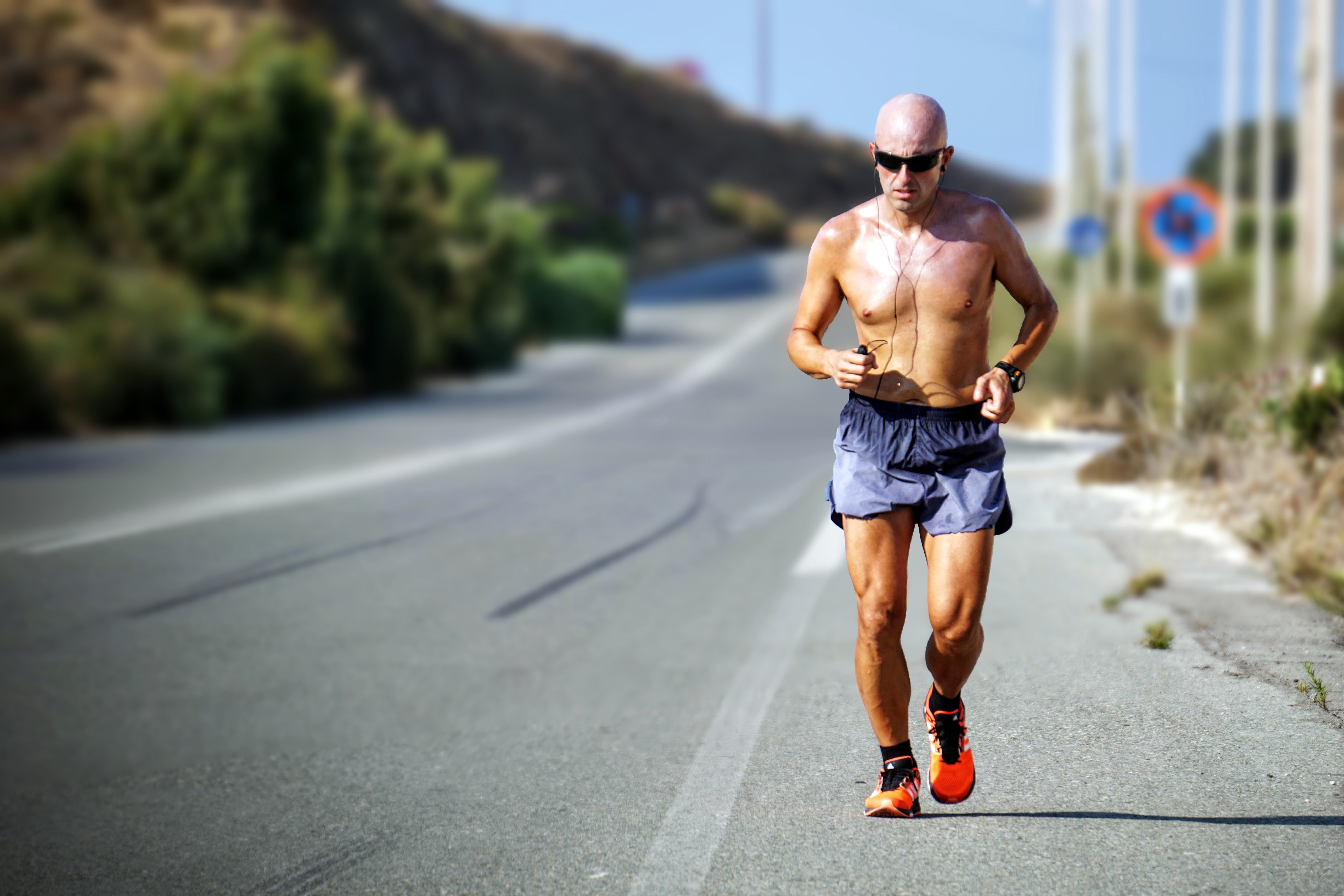
Q: Stemming from the helpful podcast and discussions over the last week on heat, I have one follow up. This stems from the incredibly nasty heatwave we are having on the East coast, but I know central Europe had the same a couple of weeks ago. If it is really hot -- and we simply must train outside -- what actions should we take to aim to maximize training? You mentioned to nail key sessions in the best environment possible, but it is hot, hot, hot from early AM. Any follow ups?
A: Well, well, I am glad you asked. It seems that Episode 74 on heat struck a chord, not least due to the ironic timing of two bouts of international high heat. As I discussed over the last couple of weeks, it is entirely possible to prepare for performance in heat and adapt to the environment to allow your best performance in context. We have also discussed strategic heat protocols to enable global performance gains in any condition, with the boost of sweat rate and blood volume. Of course, acclimating to heat doesn’t mean that your performance aligns exactly with what your performance would be in prime conditions. It also won’t make things easy. Heat is a nasty performance sucker but managing and being prepared should help you experience less of a performance decline. This is what is key, a great performance in heat is often being “less impacted.” We can never expect no impact. We remember that a key message I offered was to aim to retain the integrity and quality of the key sessions. Don’t seek heat, seek best performance in the key sessions
You are stuck having to train in high heat, there is no escape. What’s the solution? It all comes down to one word:
Expectations.
It is critical that you manage and evolve your expectations. Welcome, ladies and gentlemen, we arrive back to the perils of metrics obsession and lack of “inner animal.” Let me give you an example, then we will frame expectations.
You are going to ride a moderately strong Z3 interval and expect the following outputs:
250W at 145 heart rate at about a 6 to 7 out of 10 effort. It is obvious that if we execute this on any given day there may be a fluctuation in heart rate and perceived effort, relative to power. Tangentially, if normal conditions were there and you happened to see:
250W at 152 HR and 8 out of 10 effort -- you better slow down and/or reduce power. You are carrying fatigue and -- by definition -- are out of expected range.
But, returning to the question and hand, let’s assume you feel fine, but it is 95 degrees out. Prior to much adaptation, if you must train in these conditions, we might experience this:
250W at 155 heart rate and 7 to 8 out of 10 effort. Again, above Z3. You might feel great going in, but the addition of an environmental stressor has drawn you out of anticipated/expected training stimulus. This is the same response as it you gained altitude or carry fatigued.
What to do? Well, you could stay stubborn and keep chasing that power. Those are my numbers and I must executed. That would be a point of performance stupidity, and you would pay the cost. Perhaps not on the day, but in the subsequent week.
Layer this approach day on day, without adjustment, for all the hot days and you will begin to accumulate layers of fatigue and stay into that ‘fit n fatigued’ place, as well as accumulating ineffective training.
What to do?
- Reduce power and ride to roughly perceived effort or heart rate (you can get away with ~ 5 beat increase relative to norm)
- Reduce power/pace in all easy sessions (even more)
- Integrate walk breaks into runs
- Shift to loops on bike/run. Then store a cooler or cold hydration to allow management
- Manage global stress with perspective. Come up a level and ensure you don’t carry fatigue.
A final note. Yes, it has started and I anticipate more this week. Coached athletes complaining of lethargy and tiredness. Every one of them is East Coast and just spent a training week in high heat. I reviewed several athletes files from my athletes, a sprinkle of coached athletes and even some Squaddies who upload files. East Coast. Seldom was there enough adjustment from normal power. They charged with a stubborn mindset and fell into fatigue and accumulation. Now they must rest out and escape underlying fatigue.
Good lessons to learn, but they better learn of performance decline is ahead.
Be smart and pragmatic.
Cheers,
Matt
PS: A final question was asked -- avoiding hyponatremia with hydration pre racing and during a race. A very limited amount of your hydration should be pure water. The only pure water should be consumed when aligned with calories that contain electrolytes. All other hydration should contain electrolytes and limited sugar which diminishes any risk of hyponatremia. I am a fan of Precision Hydration tabs, and for daily life, we utilize 250 mg of sodium tabs which prevents risk.
Please sign in to leave a comment.
Comments
0 comments